Why Antioch sees so many condensate leaks
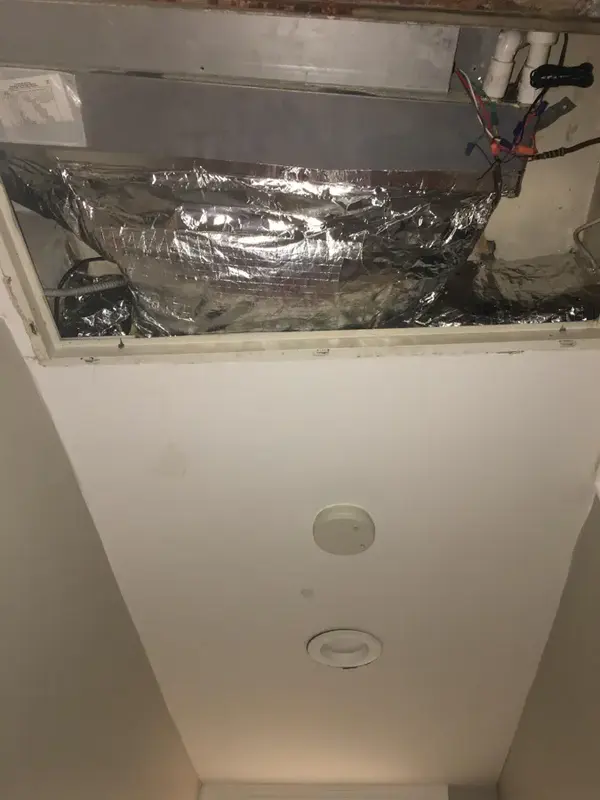
Nashville summers are long and humid, so air conditioners run for months and pull a steady stream of water out of the air. In many Antioch apartments and townhomes, the air handler sits in a hall closet or above a ceiling, and in slab homes it often sits in the attic. Algae and dust clog the small condensate line, the pan fills and water spills over, sometimes slowly for days before anyone sees a stain.
- Algae clogs in the condensate drain line
- Cracked or rusted drain pans
- Float switches that are missing or stuck
- Frozen coils that melt all at once
How the water gets handled
The HVAC tech clears or replaces the line and pan. The restoration team handles the water already in the building. The tech who does the walkthrough uses thermal imaging and meters on the closet walls, the floor or the ceiling below, because condensate leaks often run a long time at a slow rate and spread farther than they look. Wet insulation above a ceiling comes out, and the drying team dries the cavities with air movers and LGR dehumidifiers, logging readings each day.
When the water came through a ceiling, the work looks like a ceiling leak; in a stacked building it can reach the unit below, covered under apartment water damage.
Keeping the line clear
The Department of Energy's air conditioner maintenance page covers clearing condensate drains. The EPA indoor air quality pages explain why moisture control matters indoors.