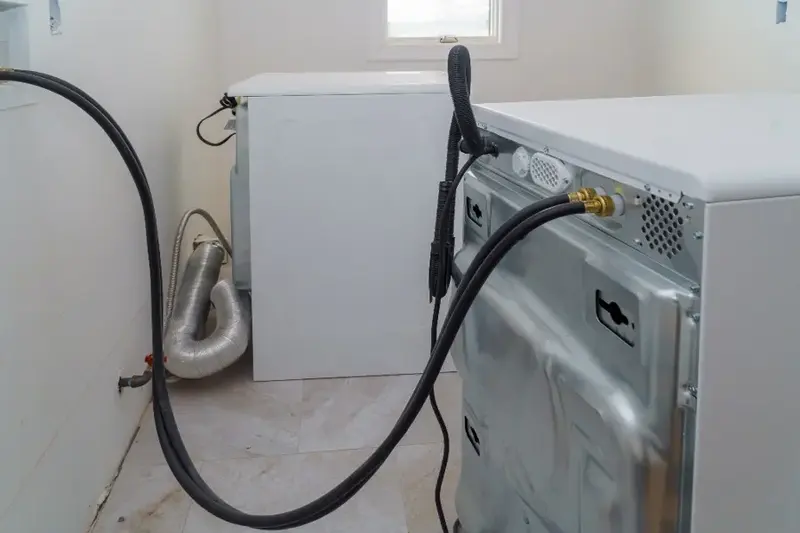
Why laundry leaks are so common in Antioch
Many Antioch townhomes and apartments put the washer in a closet on the second floor, next to the bedrooms. That is convenient until a rubber supply hose splits under pressure or the drain backs up mid-cycle. A supply hose keeps pouring clean water until the valve is shut, and the water runs straight down into the ceiling of the room or unit below.
- Rubber supply hoses that crack with age
- Drain hoses that pop out of the standpipe
- Standpipe clogs that overflow wash water
- Missing or unpiped washer drain pans
How it gets cleaned up and dried
The extraction crew pulls the water from the laundry closet and any carpet nearby. Wash water is gray water, Category 2, so affected surfaces are cleaned and treated with an antimicrobial before drying. The tech who does the walkthrough then checks the subfloor and the ceiling below with thermal imaging, because water under a washer spreads out of sight.
The drying team dries the floor and wall cavities and, where needed, the ceiling below, with air movers and LGR dehumidifiers and readings logged daily. When the leak reached another unit, see apartment water damage.
Preventing the next one
Braided stainless supply hoses, a drain pan piped to a drain and an automatic shutoff valve prevent most washer floods. The Consumer Product Safety Commission tracks appliance recalls, and UT Extension publishes home maintenance advice for Tennessee households.