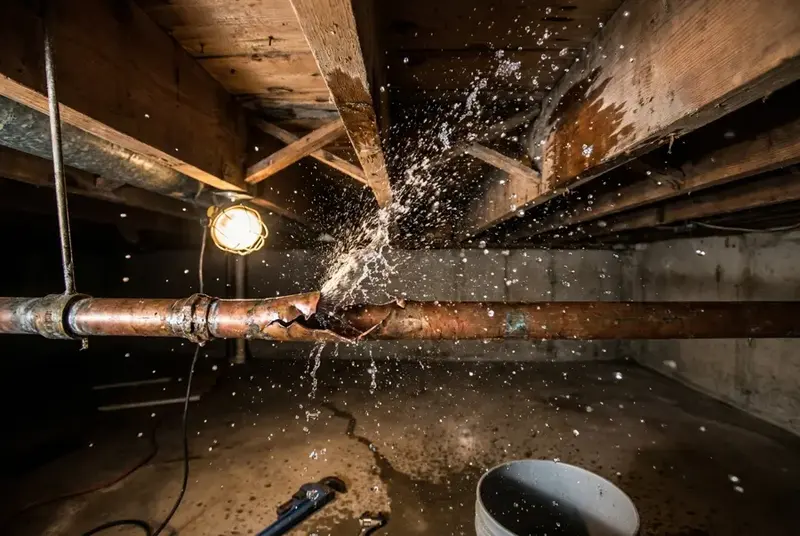
Why pipes fail in Antioch homes and apartments
Much of Antioch was built between the 1970s and the early 2000s, and plenty of that plumbing is now 25 to 50 years old. Some buildings from the late 1970s through the mid 1990s used polybutylene supply lines, which can crack at the fittings with age. Copper can develop pinholes, and the braided hoses on sinks and toilets wear out quietly.
- Aging fittings on polybutylene and older copper lines
- Braided supply hoses under sinks and toilets
- Lines in exterior walls and attics during hard freezes
- Pressure spikes that stress old joints
When a pipe splits during a cold snap, the job overlaps with frozen pipe cleanup.
What the cleanup involves
The extraction crew removes standing water first. Then the tech who does the walkthrough maps moisture inside the walls with pinless meters and thermal imaging, because supply-line water runs down inside cavities and under flooring. Where drywall can dry, the drying team sends air into the cavity through small openings. Where readings stay high or insulation is soaked, the lower drywall comes out in a clean flood cut.
Air movers and LGR dehumidifiers run until each material reaches the drying goal, with readings logged daily. The plumber repairs the pipe; the restoration file documents the water.
Helpful references
Metro Nashville's Metro Water Services handles problems on the public side of the meter. The EPA moisture guide explains why drying inside 24 to 48 hours matters.