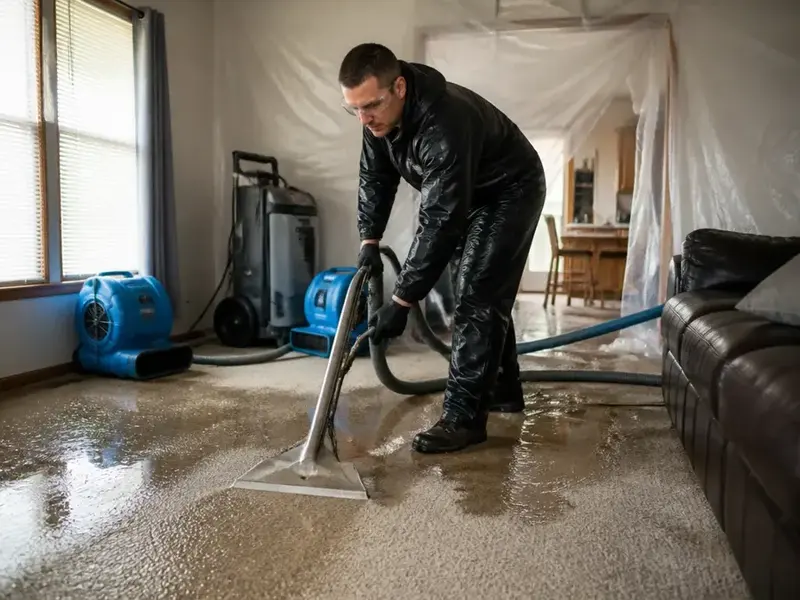
Why extraction comes before anything else
Air movers and dehumidifiers dry water that has soaked into materials. They do very little against water still sitting on the floor. That is why the extraction crew goes first. A truck-mounted unit pulls water out of carpet and pad far harder than a shop vacuum, and the water leaves the building through a hose instead of being carried room to room.
In Antioch, the most common extraction calls come from the places water collects fastest: ground-floor apartment units, townhome lower levels on slab, and carpeted living rooms under a failed supply line upstairs.
- Truck-mounted extraction for carpet, pad and large areas
- Weighted extraction tools that squeeze water out of pad in place
- Portable extractors for upper floors and tight hallways in apartment buildings
- Squeegees and pumps for tile, vinyl plank and concrete
What happens right after the water is out
The tech who does the walkthrough maps moisture past the visible wet line, because water travels under baseboards and into the bottom plate of walls. Thermal imaging and pinless meters show where it went. The drying team then sets air movers and LGR dehumidifiers to match what is actually wet, and records readings every day until the materials reach the drying goal.
Carpet pad that took on clean water can sometimes be dried in place. Pad soaked by gray water, or water that sat for days, usually comes out. The EPA guide to mold and moisture explains why the 24 to 48 hour window matters so much.
When the water came from outside
Water that came in from a storm or from Mill Creek rising is a different job. Flood water is Category 3, and porous materials it touched are removed, not dried. See flood cleanup in Antioch for how that work is handled, and the Ready.gov flood safety page before walking into any flooded room.