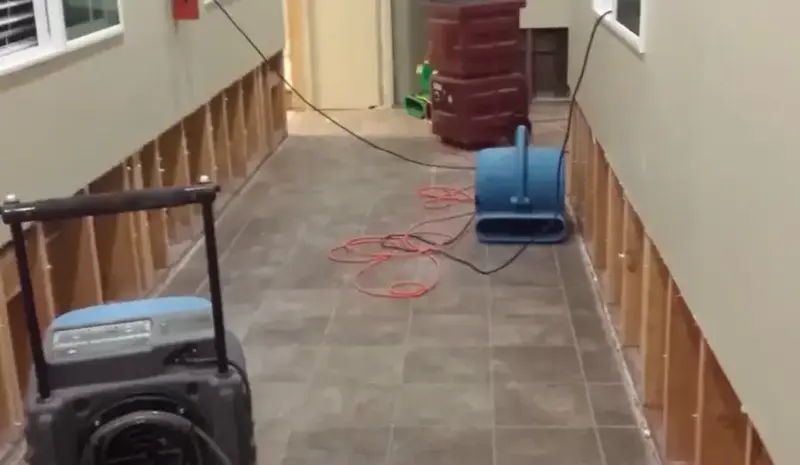
What structural drying means
Surface drying makes a room look finished. Structural drying gets the water out of the materials themselves: the bottom plates of walls, the subfloor, the back of the drywall, the slab and the hardwood. IICRC S500 is the industry drying standard, and its goal is simple to state: wet materials are dry when they read within 2 to 4 points of a dry reference material of the same kind in an unaffected part of the building.
- Class 1: a small area, low-porosity materials
- Class 2: a whole room, carpet and walls wet up to about two feet
- Class 3: water from above, ceilings, walls and floors saturated
- Class 4: dense materials like hardwood, plaster and concrete that hold water deep
How the drying team sets up and monitors
The tech who does the walkthrough maps moisture before any equipment goes down, so the setup matches what is actually wet. Air movers are placed to the evaporation load of each room, and LGR dehumidifiers pull that moisture back out of the air. For Class 4 materials, desiccant dehumidifiers and focused cavity or floor drying systems go in. Every day the team records temperature, humidity and material readings in the drying log and moves equipment to whatever is still wet.
In Antioch's humid months, outside air holds a lot of water, which is why sealed rooms and dehumidifiers dry faster than open windows. See emergency water removal for the extraction that comes first.
Why the log matters
Daily psychrometric readings and moisture logs show an adjuster that the structure was dried, not guessed at. The EPA moisture guide explains why drying within 24 to 48 hours prevents mold, and UT Extension covers humidity control in Tennessee homes.