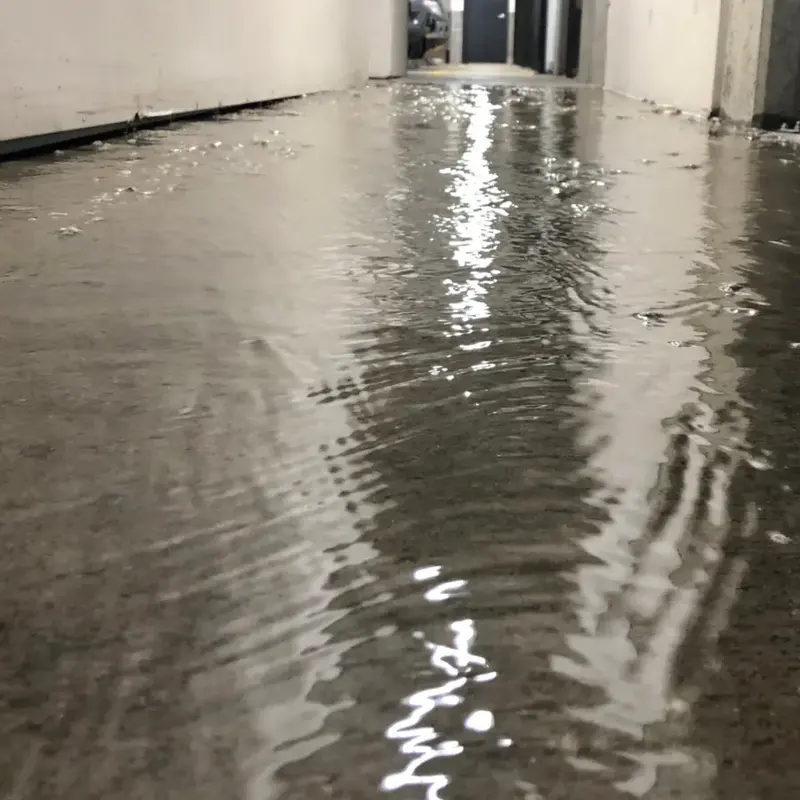
Why apartment leaks spread
Antioch has a large share of apartment communities along Bell Road, Hickory Hollow Parkway and Murfreesboro Pike, many built in the 1980s and 1990s. Stacked units share plumbing chases, and the water heater, washer box, toilet and tub in one unit sit right above the ceiling of the next. When one of them fails, water follows the framing down and sideways, often showing up two rooms away from the source.
- Water heater tanks in hall closets that rust through at the bottom
- Washer supply hoses in stacked laundry closets
- Toilet supply lines and wax rings that let go overnight
- AC condensate lines that clog in humid Nashville summers
How the restoration team works a multi-unit leak
The tech who does the walkthrough starts at the source and follows the water with thermal imaging and meters, unit by unit, including ceilings and shared walls that look dry. Each unit gets its own moisture map and drying log, because the building owner, the renters and sometimes two insurance companies all need to see what happened in their part of the building.
The extraction crew pulls water from carpet and hallways, and the drying team opens only what has to be opened: a ceiling pocket holding water, or the lower drywall where readings stay high. Air movers and LGR dehumidifiers run until each unit reaches the drying goal.
Renters, owners and insurance
In most apartment leaks, the building owner's policy covers the structure, and a renters policy covers the tenant's belongings and sometimes the cost of staying elsewhere. The Tennessee Department of Commerce and Insurance explains the basics of renters and homeowners coverage. Coverage depends on your policy, so it is worth checking with your own insurer. For the ceiling side of a leak, see ceiling leak water damage.