Why sewage backs up in Antioch
Sewage comes back up at the lowest drain in the building, which in Antioch usually means a first-floor shower, a ground-floor apartment toilet or a floor drain in a garage or utility room. Tree roots in older clay and cast iron laterals, grease and wipes blocking the main, and failed pumps in lower-level bathrooms are the usual causes. During heavy storms, rainwater that gets into the sewer can overload it and push water back toward homes.
- Roots in older laterals under the yard
- Grease and wipes blocking the main line
- Storm water overloading the public sewer
- Shared building lines in apartment communities
The Category 3 protocol
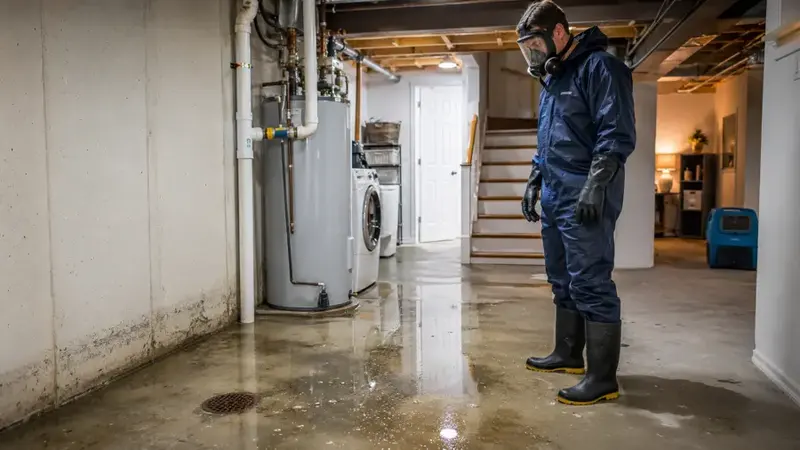
Sewage backup is Category 3 the moment it happens, and porous materials touched by Category 3 water get removed, not dried. The mitigation team sets containment with plastic sheeting and negative air, wears PPE and runs HEPA air scrubbers. The extraction crew removes the water and solids, then carpet, pad, drywall above the wet line and anything else porous that the sewage touched are bagged and removed.
Hard surfaces are cleaned and treated with an EPA-registered antimicrobial at its label dwell time before drying starts. The drying team then dries the framing and slab to the goal. For a single overflowing toilet, see toilet overflow cleanup.
Who to call and coverage
Blockages on the public side are handled by Metro Water Services; the private lateral is the owner's responsibility. OSHA flood cleanup guidance explains the health risks of contaminated water. Sewer backup coverage is often a separate endorsement, so it is worth checking with your own insurer.