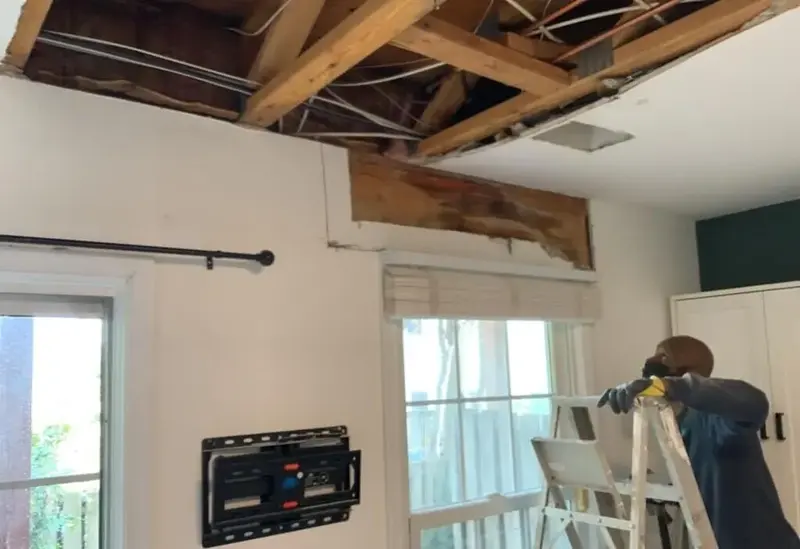
How storms get water into Antioch roofs
Middle Tennessee gets around 50 inches of rain a year, much of it in fast spring storm lines with strong wind. Wind-driven rain gets under lifted shingles, around chimney and wall flashing and through roof vents. Older shingle roofs on 1980s and 1990s homes and the long rooflines on apartment and townhome buildings see the most leaks, and a leak can soak attic insulation long before a stain shows below.
- Shingles lifted or torn off in high wind
- Worn flashing at chimneys, walls and skylights
- Pipe boots and roof vents that crack with age
- Clogged gutters backing water under the roof edge
Drying below the roof
The roofer or a restoration crew tarps the damaged area first. The tech who does the walkthrough then checks the attic decking, insulation and ceiling below with thermal imaging and meters. Soaked insulation holds water against drywall and usually comes out. The drying team dries the ceiling cavities and any walls the water ran down, with air movers and LGR dehumidifiers, logging readings each day.
When the stain is on a lower floor instead, the source is usually plumbing, not the roof; see ceiling leak water damage.
Weather and claims
The National Weather Service Nashville office posts severe storm warnings for Davidson County. Storm damage claims usually depend on showing sudden damage, so dated photos matter; the Tennessee Department of Commerce and Insurance has consumer guidance on filing claims.