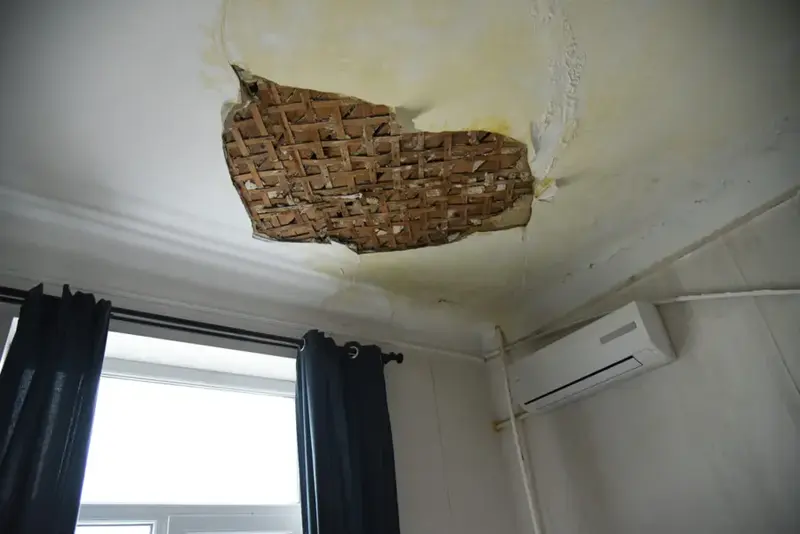
Where Antioch ceiling leaks come from
In two-story townhomes and stacked apartments, the usual source sits right above the stain: an upstairs toilet or tub, a washer in a second-floor laundry closet, a water heater in a hall closet or an air handler in the attic. Roof leaks show up in top-floor ceilings after spring storm lines, but plumbing is the more common culprit indoors. See roof leak water damage for the storm side.
- Toilet supply lines and wax rings on the floor above
- Tub and shower drains leaking into the joist bay
- Condensate overflow from an attic or closet air handler
- Supply line fittings inside the ceiling itself
How a wet ceiling gets dried
The tech who does the walkthrough uses thermal imaging to see how far the water spread across the ceiling, often much farther than the stain. When water has pooled on top of the drywall, the crew drains it through a small controlled opening instead of waiting for it to break through. Wet insulation above the ceiling holds water against the drywall, so it usually comes out.
The drying team then dries the cavity, not just the painted surface, by moving air into the joist bay and running LGR dehumidifiers in the room. Readings go into the drying log each day. Ceilings that never sagged often dry in place; sagged or softened drywall is cut out and replaced after drying.
Electrical and safety notes
Water and ceiling fixtures are a real hazard. The OSHA flood cleanup guidance covers electrical risks during water damage work, and the EPA mold page explains why wet drywall should be dry within 24 to 48 hours.